
Our Capabilities
Complex geometry, tight tolerances, traceable process. We take your part to production readiness at whatever stage it is in.
5-Axis CNC Milling
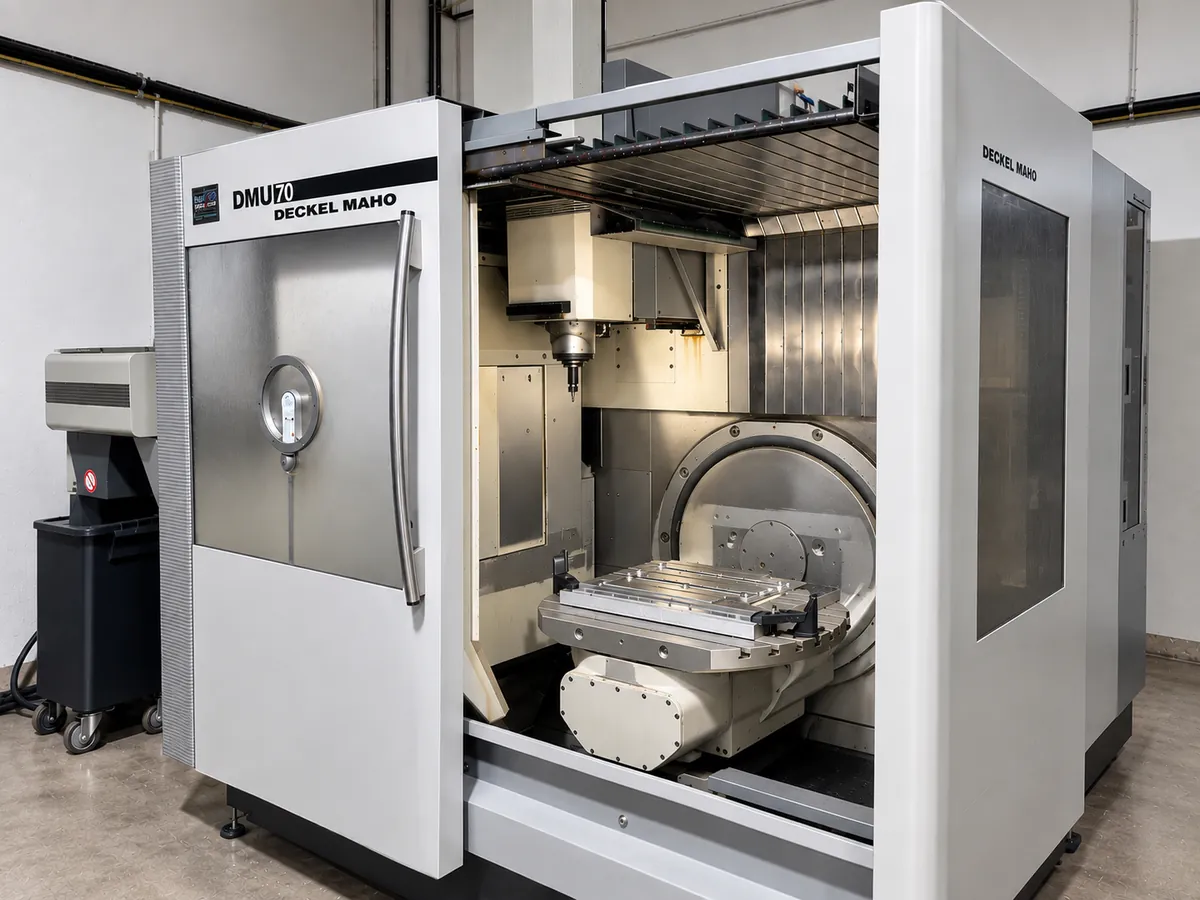
With our DMG Mori DMU 50 and DMU 70 5-axis machining centres we machine complex, multi-sided parts in a single setup. Fewer setups mean higher positional accuracy and shorter lead times. For 3-axis work our DMG Mori DMC 635 vertical machining centre is in service.
CNC Turning / Swiss-Type
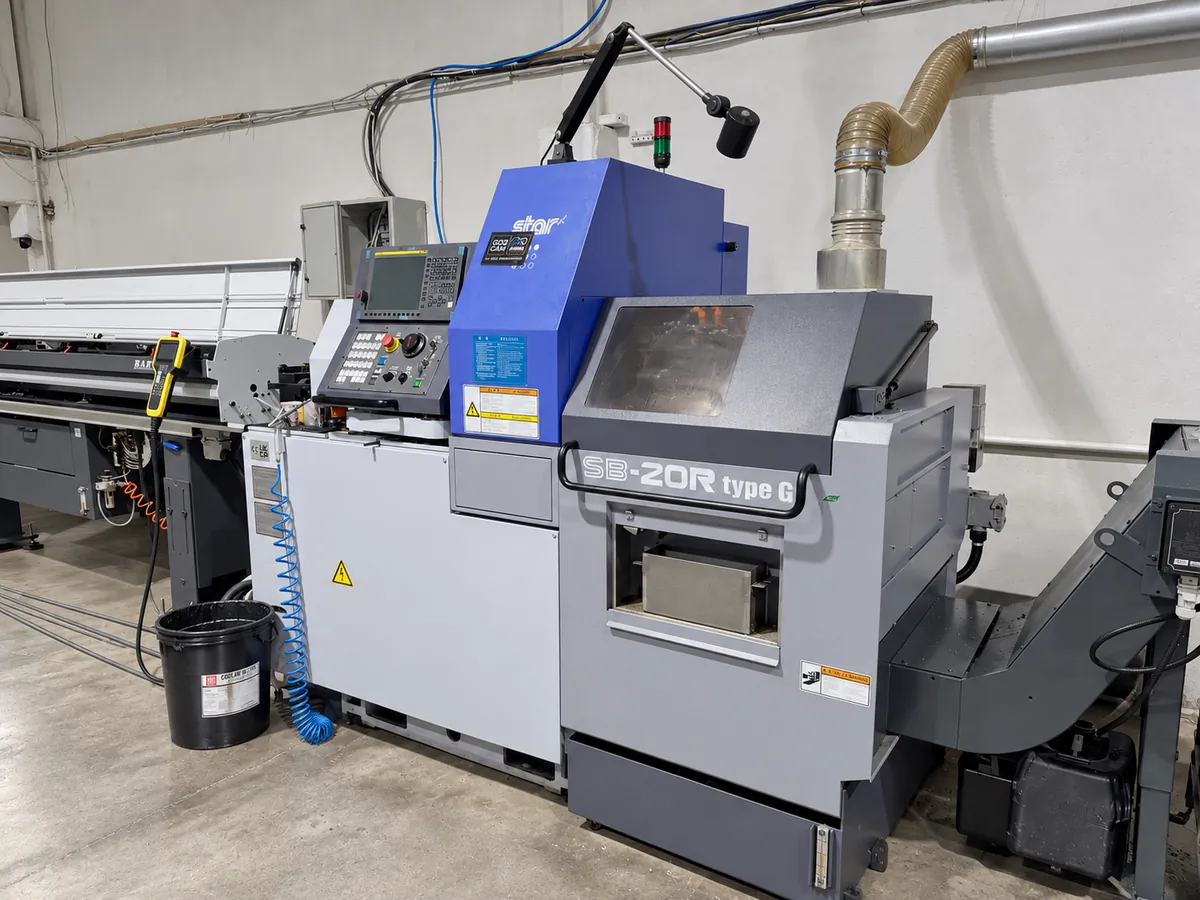
With our sliding head lathes up to Ø 40 mm we complete small-diameter, long and precise cylindrical parts in a single operation: pins, shafts, bushings and fasteners.
Prototyping and R&D Production
If the design is not yet settled, our engineering team provides design-for-manufacture (DFM) feedback. We produce rapid prototypes in single pieces or small batches and manage revisions under control.
Series Production and Mechanical Assembly
We verify the approved prototype with first article inspection (FAI) and move it to low and medium volume series production. On request we carry out sub-assembly and kitting.
Outsourced Process Management
We manage heat treatment, anodising, coating and painting with our approved suppliers, and deliver the part together with its process certificates from a single point.
Measurement and Reporting
With CMM, VMS and surface roughness measurement we deliver the dimensional report, raw material certificate and certificate of conformity (CoC) together with the part.
Our working models
| Model | For whom |
|---|---|
| ETO — Engineer to order | Newly developed parts needing design support |
| MTO — Make to order | Repeat orders with a finished technical drawing |
| Prototype | Single piece / small batch, fast validation |
| Low–medium volume series | Planned batch production after FAI |
Materials we machine
- Aluminium alloys
- Stainless steels
- Alloy and tempered steels
- Titanium alloys
What 5-axis machining gives you
On a three-axis machine, finishing a complex part means unclamping, turning and re-clamping it several times. Every new setup introduces its own error margin; deviation accumulated over five separate setups can shift the overall dimensions of the part even when each individual setup stays within tolerance.
In five-axis machining the machine rotates the tool around the part and reaches multiple faces in a single setup. There are three concrete consequences: setup-induced error disappears, inclined surfaces and angled holes can be machined in one operation, and surface quality improves because the tool approaches the material at a more favourable angle. This is why five-axis is preferred for complex, tight-tolerance geometries. For prismatic parts machined from one direction, a three-axis vertical machining centre is both faster and more economical; the machine is selected to suit the part.
When is Swiss-type turning the right choice?
Long, slender parts deflect under cutting forces on a conventional lathe, which makes holding diameter along the length difficult. On a Swiss-type machine the bar stock advances through a guide bushing and cutting always takes place immediately next to that support. Because the part does not deflect, dimensional stability is maintained even on delicate geometries.
The second advantage is that the part is finished in a single setup: turning, milling, drilling and cut-off follow one another on the same machine. That makes Swiss-type turning the most efficient method for small-diameter, high-quantity parts such as pins, shafts, bushings and fasteners, in terms of both cost and repeatability. Our Swiss-type machines work up to Ø 40 mm.
Materials we machine and what we watch for
- Aluminium alloysLight and readily machinable, giving clean surfaces at high spindle speeds. On thin-walled parts we plan the clamping strategy separately to counter distortion from clamping pressure and heat.
- Stainless steelsHigh corrosion resistance, but prone to work hardening during machining. Steady feed, correct cutting speed and monitoring of tool wear are decisive for dimensional stability.
- Alloy and quenched-and-tempered steelsPreferred where structural strength is required. On material destined for heat treatment, the process sequence and stock allowance planning directly affect the final dimensions.
- Titanium alloysA high strength-to-weight ratio makes them common in aerospace. Low thermal conductivity concentrates heat in the cutting zone, so reduced cutting speed, high-pressure coolant and close attention to tool life are required.
Services we provide alongside machining
- Prototype and R&D productionWhere the design is not yet settled we provide manufacturability (DFM) feedback, produce rapid prototypes in single pieces or small batches, and manage revisions under control.
- Series productionThe approved prototype is verified by first article inspection (FAI) and carried into planned low-to-medium volume batch production.
- Mechanical and sub-assemblyMulti-part groups can be assembled and delivered dimensionally verified and secured.
- Management of special processesHeat treatment, anodising, plating and painting are managed through our approved suppliers; the part is delivered from a single point together with the process certificates.
- Inspection and reportingWith CMM, VMS and surface roughness measurement we supply the dimensional report, material certificate and certificate of conformity (CoC) with the part.
Frequently asked questions
Which services do you provide?
5-axis CNC milling (DMG Mori DMU 70 and DMU 50), 3-axis vertical machining (DMG Mori DMC 635), Swiss-type CNC turning (up to Ø 40 mm), prototype and R&D production, manufacturability (DFM) feedback, low-to-medium volume series production, mechanical and sub-assembly, management of special processes (heat treatment, anodising, plating, painting), and in-house dimensional inspection and reporting with CMM, VMS and a surface roughness tester.
How many axes can you machine on?
Five and three. Our DMG Mori DMU 70 and DMU 50 five-axis machining centres handle complex, multi-face parts in a single setup, while the DMG Mori DMC 635 vertical machining centre covers prismatic parts and series milling.
Which materials do you machine?
Aluminium alloys, stainless steels, alloy and quenched-and-tempered steels, and titanium alloys.
Do you have a solution for small-diameter, high-quantity parts?
Yes. Our Swiss-type machines up to Ø 40 mm complete small-diameter, long and precise cylindrical parts such as pins, shafts, bushings and fasteners in a single operation.
Do you offer contract manufacturing?
Yes. We manufacture to your own technical drawings (MTO) and, on request, provide manufacturability (DFM) feedback.
Do you provide assembly?
Yes. For multi-part groups we perform mechanical and sub-assembly and deliver the group dimensionally verified and secured.
Can you provide heat treatment, anodising or plating?
We manage these through our approved suppliers. You receive the part with heat treatment, anodising, plating or painting completed, from a single point, together with the process certificates.
Do you carry out inspection in-house?
Yes. A COORD3 ARES CMM (Renishaw PH20 5-axis head, TCR20 probe changer, RSF optical scales, TouchDMIS), a Rational non-contact video measuring system (VMS), a surface roughness tester (Ra/Rz) and hand measuring instruments are all on our own premises. We do not outsource dimensional inspection.
Which documents come with the parts?
The dimensional inspection report (CMM/VMS results), the material certificate (EN 10204 3.1), any special process certificates, the certificate of conformity (CoC) and, before series production, the first article inspection report (FAI).
I have a sample but no technical drawing. Can you still produce it?
Work that requires dimensions to be taken from a sample and a drawing to be created is handled as an R&D job; it is enough for us to see the sample.
How do you manage drawing revisions?
Revisions are archived rather than deleted and production always runs to the valid revision; which part was made to which revision is on record.
Send us your technical drawing and quantity; we will prepare your quote with a manufacturability review.
Request a Quote